The Man Who Kicked Down Every Door
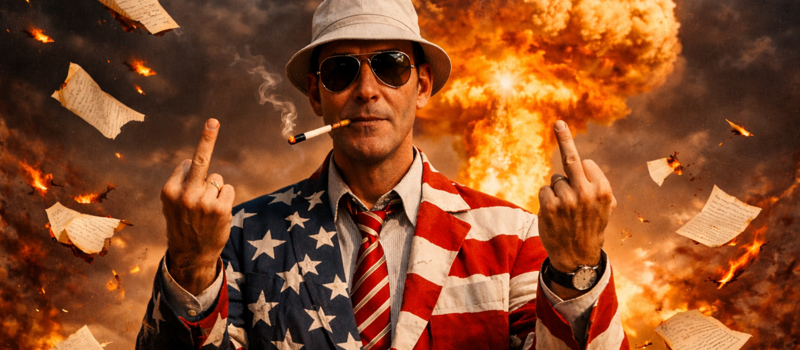
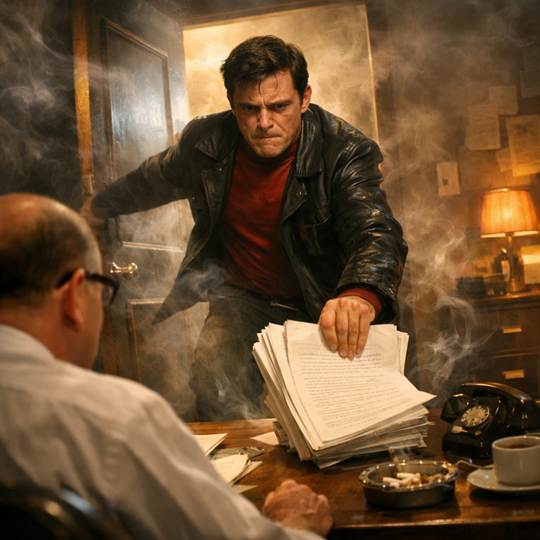
Harlan Ellison was not your typical author, quietly submitting manuscripts and waiting for a thumbs-up. No, he kicked down doors, argued with editors, and dropped brilliance just to show he could. Born in 1934 in Cleveland, this literary whirlwind was shown the door at Ohio State University; reportedly for punching a professor who had the audacity to insult his writing. Subtlety? Not in Ellison’s vocabulary.
In the 1950s, he earned a living churning out pulp stories, but the 1960s turned him into a literary force of nature. His most famous work, I Have No Mouth, and I Must Scream, is a bleak masterpiece that doesn’t just disturb you, it haunts you like a bad decision at 2 a.m. Ellison had a knack for tackling big ideas about technology and humanity, all while stripping away any comforting delusions.
Master of the Short Form
What truly set Ellison apart was his knack for the short form. While others chased sprawling novels, he shot like a precision weapon. You could devour one of his stories in one sitting and still be mulling it over days later, probably while staring at your ceiling. And the body of work? Staggering — over 1,700 short stories, novellas, screenplays, teleplays, and essays across a career that spanned six decades.
A Television Maverick
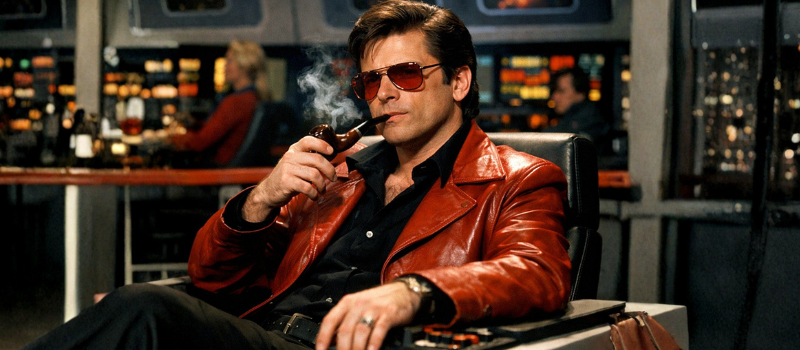
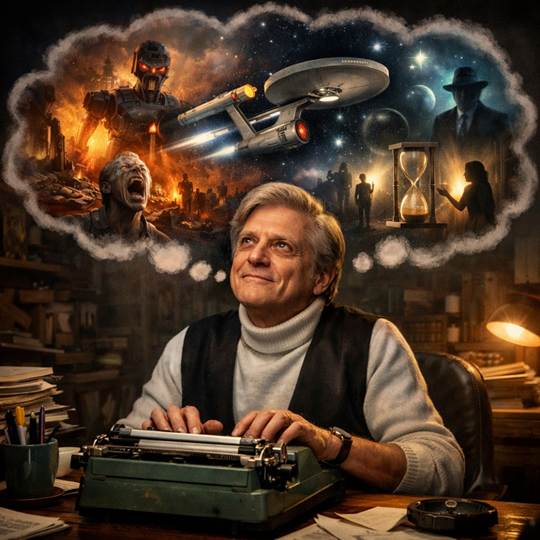
He was also a TV maverick, penning episodes for classics like The Outer Limits and Star Trek, and serving as a creative consultant on Babylon 5. His episode “The City on the Edge of Forever” is still hailed as one of the best sci-fi hours ever, winning both a Hugo Award and a Writers Guild Award. Naturally, he argued with producers about it: why not? He even wrote an unproduced script for the 1960s Batman series — a story that would have introduced Two-Face to Adam West’s Gotham — which finally saw the light of day decades later as a DC Comics graphic novel.
Ellison and the Comics World
Speaking of comics, Ellison’s fingerprints are all over the medium. He contributed stories adapted into Marvel Comics, including a two-part Avengers and Hulk arc adapted by Roy Thomas. Dark Horse published Dream Corridor in the ’90s, an anthology series adapting his work with an all-star lineup of artists. And in 2013, DC released Harlan Ellison’s 7 Against Chaos, an original graphic novel illustrated by Paul Chadwick. He may not have been a full-time comics writer, but his influence on the industry’s top creators — from Neil Gaiman to Roy Thomas — was undeniable.
A Legacy That Still Burns
Ellison’s impact on fiction is undeniable. He demanded higher standards and more courage from writers. Love him or argue with him, one thing’s for sure: he left a mark that still burns… much to his delight, I’m sure!